The Research Institute for Advanced Innovation and GeoStrategy (RAIS)
RAIS Inaugural Symposium “AI and Future Warfare” Event Report
Share


On May 14, 2026, the International House of Japan hosted the inaugural symposium of the Research Institute for Advanced Innovation and GeoStrategy, or RAIS, under the title “AI and Future Warfare” at The Okura Tokyo.
The symposium opened with remarks by the organizer, followed by remarks from Minister of Defense Koizumi Shinjiro. The opening session also introduced the mission of RAIS and set the stage for a discussion on how artificial intelligence and other advanced technologies are reshaping national security, future warfare, and defense innovation.
RAIS is a new interdisciplinary research institute established to examine the implications of advanced technologies, including artificial intelligence, quantum technology, and biotechnology, for security strategy, policymaking, the international order, and global governance. The symposium marked the official launch of RAIS and brought together experts and practitioners from policy, technology, industry, and defense communities to discuss the future of security in the age of AI.
The discussions were held under the Chatham House Rule. Accordingly, this report summarizes the main themes of the discussion without attributing specific remarks to individual speakers.
The symposium consisted of two sessions. The first session, “AI in Modern/Future Battlefield,” examined how AI is transforming modern and future battlefields. The second session, “Innovation Ecosystem for National Security,” explored how Japan should build a defense innovation ecosystem suited to the age of AI.
Session 1: AI in Modern/Future Battlefield
The first session highlighted a shared recognition that AI is no longer merely a tool for improving administrative efficiency. It is becoming a strategic infrastructure for national security.
The discussion identified several defining characteristics of AI in the security domain. These include its dual-use nature, its ability to perform complex tasks with increasing autonomy, and its broad range of potential applications across cyber operations, intelligence analysis, logistics, command and control, targeting support, and autonomous systems.
A key point raised in the discussion was that the military implications of AI should not be understood only through the lens of autonomous weapons. AI has a much wider significance. It can help extract meaningful signals from vast amounts of data, improve situational awareness for commanders, support logistics and resource allocation, assist operational planning, and enhance the overall effectiveness of defense organizations.
In these areas, AI should be understood not simply as a replacement for human labor, but as a tool that can improve the quality of decision-making. It can help defense organizations become more adaptive, more efficient, and better able to operate in complex environments.
At the same time, the discussion emphasized that the military use of AI raises serious ethical, legal, and institutional challenges. These include the risk of overreliance on machines, lack of explainability, data bias, automation bias, accidental escalation, and uncertainty over responsibility when things go wrong.
Particular attention was given to the importance of meaningful human control and accountability in high-stakes military decision-making. Simply keeping a human “in the loop” is not sufficient. Humans must understand the limitations, uncertainties, and failure modes of AI systems. Training, doctrine, auditability, and institutional safeguards are therefore essential for ensuring that AI systems are used responsibly in defense contexts.
The session also underscored that the battlefield in the age of AI extends beyond the front line. It increasingly includes civilian infrastructure, manufacturing capacity, data infrastructure, supply chains, and the ability of allies and partners to sustain support over time. In this broader battlefield, AI depends not only on models and software, but also on semiconductors, edge computing, communications infrastructure, cloud systems, and resilience.
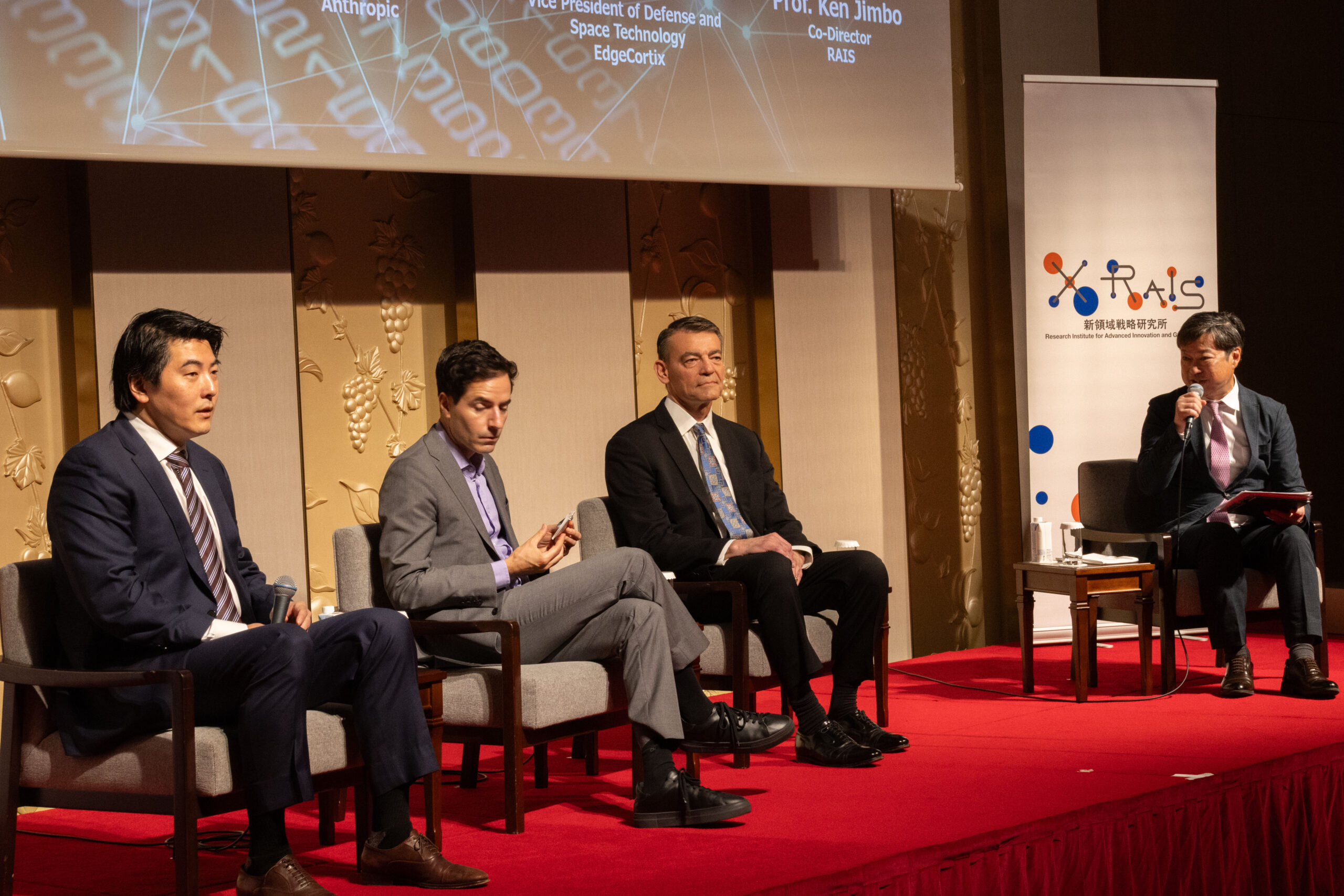
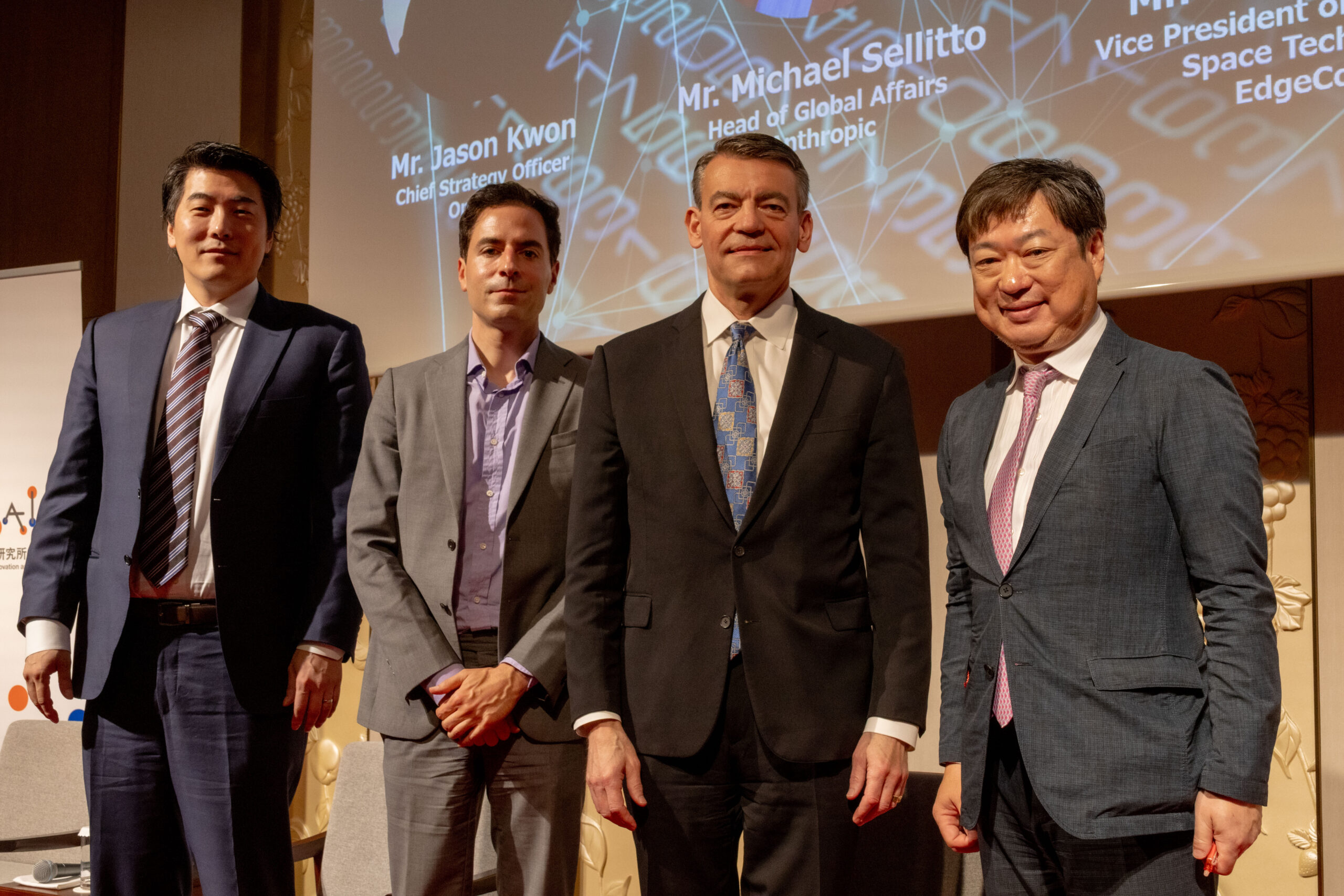
Session 2: Innovation Ecosystem for National Security
The second session built on the recognition that warfare is becoming increasingly software-defined, and that AI, autonomous systems, and data superiority are becoming central to future conflict. The discussion focused on how Japan should respond institutionally, industrially, and in cooperation with allies.
The central question was how to connect commercial technologies with defense needs, and how to move beyond prototypes toward deployment, mass production, operational integration, and scale.
Participants noted that, in today’s defense environment, innovation cannot be generated by the traditional defense sector alone. Commercial technology sectors move at extraordinary speed, driven by the demands of global consumers and enterprises. Defense organizations therefore need mechanisms to absorb commercial innovation and apply it to real operational problems.
The discussion emphasized the importance of building bridges between defense organizations and the commercial technology sector. Rather than beginning with highly detailed requirements documents, governments should begin with clearly defined operational problems. This would allow startups, established companies, and firms from adjacent industries to propose creative solutions.
For Japan, several institutional challenges were identified. These include the need for rapid acquisition, flexible funding, closer connections with operational users, early involvement of the Self-Defense Forces as scaling entities, and institutional mechanisms that can move technologies quickly from experimentation to implementation. Traditional procurement processes that rely on detailed specifications from the outset are often poorly suited to fast-moving fields such as AI and software.
Manufacturing capacity was another major theme. The discussion pointed to the limitations of relying only on highly sophisticated but expensive systems that take a long time to produce. Modern warfare is likely to involve the large-scale consumption of drones, missiles, munitions, sensors, and other systems. As a result, “affordable mass” is becoming increasingly important.
To achieve this, defense innovation should not be confined to traditional defense contractors. Commercial manufacturing capacity, startups, materials companies, component suppliers, and firms from adjacent sectors should be incorporated into the defense innovation ecosystem. Defense systems should be designed from the outset with scalability and manufacturability in mind.
The session also discussed the potential and vulnerabilities of Japan’s industrial base. Japan possesses advanced manufacturing capabilities, a highly skilled workforce, and strong technological foundations. At the same time, it faces challenges related to supply-chain dependence, including the risk of disruption in critical components. In fields such as drones and autonomous systems, domestic components, standardization, supply-chain visibility, and economic security resilience will be crucial.
The discussion suggested that Japan’s defense innovation ecosystem should reach beyond a small number of existing defense firms. Industries such as gaming, telecommunications, advanced materials, cloud computing, AI, semiconductors, and data engineering may all have important roles to play in national security innovation.
Cloud and data infrastructure were also discussed as essential foundations for future defense capabilities. Drone swarms, long-range precision strike, integrated air and missile defense, undersea warfare, information sharing, and cyber defense all depend on advanced data processing, AI, cloud infrastructure, and secure networks.
Resilience in data infrastructure was identified as a strategic issue. Japan will need to combine sovereign control over data with cooperation with allies and global cloud infrastructure. This is not only a national issue for Japan, but also an architectural challenge for the Japan-U.S. alliance.
Human capital was another cross-cutting theme. The discussion emphasized the need for people who can understand both military requirements and advanced technology. Defense innovation in the age of AI requires individuals who can connect uniformed personnel, defense officials, engineers, data scientists, startups, established firms, and policy researchers. Building such “bridge” talent will be essential for Japan’s future defense innovation ecosystem.

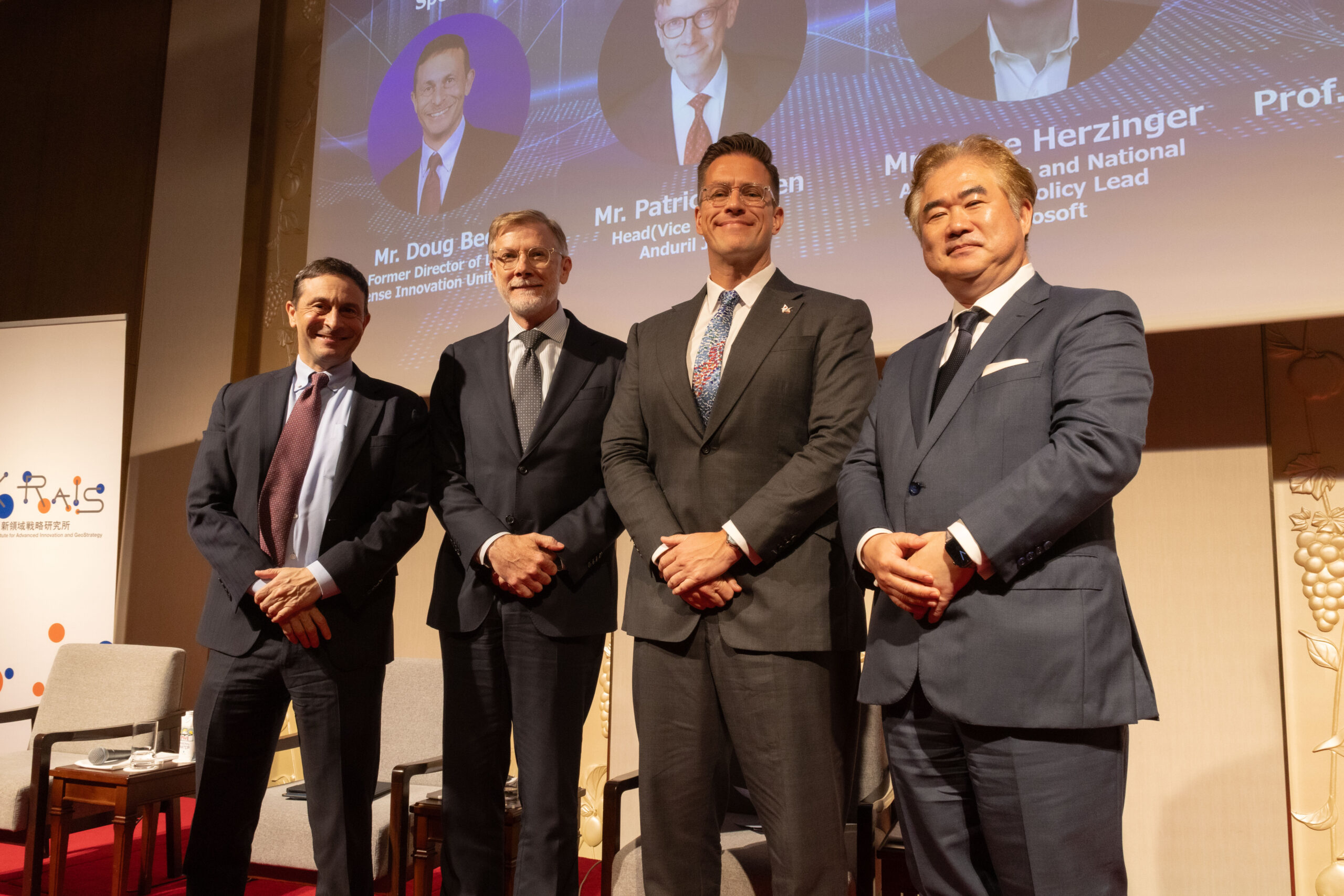
Key Takeaways
The symposium made clear that Japan’s challenge in the age of AI is not simply about adopting new technologies. The more fundamental task is to design AI and autonomous systems together with strategy, institutions, industry, alliances, ethics, human capital, and data infrastructure.
Responding to the speed of technological change will require Japan to reconsider traditional defense procurement and industrial structures. New mechanisms are needed to connect commercial innovation with defense needs, accelerate experimentation and deployment, and enable technologies to scale.
At the same time, the use of AI in national security must be guided by human control, accountability, transparency, and democratic legitimacy. The pursuit of speed and efficiency should be matched by careful attention to responsibility, oversight, and institutional design.
RAIS was established to address precisely these cross-domain challenges. This inaugural symposium marked an important first step in RAIS’s effort to connect advanced technology with security strategy, foster dialogue among government, industry, academia, and allies, and develop a Japanese intellectual platform for security innovation.
Looking ahead, RAIS will continue to advance research and dialogue on AI, advanced technologies, defense innovation, economic security, and the international order, while contributing policy insights from Japan to the wider international community.
Archives
Program
The Research Institute for Advanced Innovation and GeoStrategy (RAIS) [Event Report] RAIS Roundtable with Kolas Yotaka – “In Wartime, Disinformation Becomes a Weapon”
Geoeconomics
Policy Research

Program
The Research Institute for Advanced Innovation and GeoStrategy (RAIS) [Event Report] The Second Overseas Defense Startup Ecosystem Survey (RAIS)
Geoeconomics
Policy Research

Program
The Research Institute for Advanced Innovation and GeoStrategy (RAIS) [Event Report] The first Global Defense Startup Ecosystem survey (RAIS)
Geoeconomics
Policy Research

Program
The Research Institute for Advanced Innovation and GeoStrategy (RAIS)
Geoeconomics
Policy Research
Related Programs



Geoeconomics IHJ Roundtable
IHJ frequently organizes roundtables as part of our mission to “contribute to building a free, open, and sustainable future through intellectual dialogue, policy research, and cultural exchange with a...
Policy Research

Geoeconomics International Conferences (Japan-Korea-US-China)