


Overview
The International House of Japan (I-House), with Shahani Associates Limited as a co-sponsor, organized the Japan-India Distinguished Visitors Program 2026 from March 16 to 18, 2026, in New Delhi and Ahmedabad. Originally launched to invite distinguished Indian intellectuals to Japan, the program has now expanded to promote truly bidirectional exchange. This year marked the first time a Japanese expert visited India under the initiative.
I-House was honored to welcome architect Kazuyo Sejima as the inaugural Japanese fellow. Recognized as one of Japan’s most influential architects, Sejima’s participation highlighted architecture as a field in which Japan holds a strong global presence. The program aimed to deepen Japan–India ties while addressing shared global challenges such as sustainability, disaster resilience, and environmental design.
The program, co-sponsored by Shahani Associates, was conducted in collaboration with the India International Centre and CEPT University, with support from the Japan Foundation. In addition, a special session by art curator and I-House Art & Design Director, Yuko Hasegawa was organized in cooperation with the Japan Foundation New Delhi office.
2025 Fellow
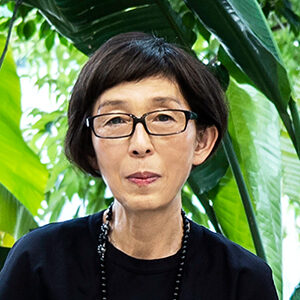
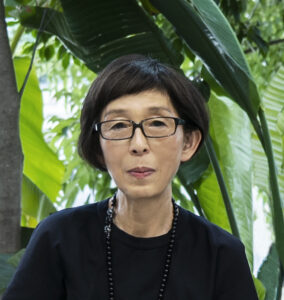
Architect, Founder of SANAA
Kazuyo SEJIMA
Born in Ibaraki Japan, Kazuyo Sejima graduated from the Japan Women’s University in 1981. In 1987 she opened her own studio in Tokyo and then in 1995, together with Ryue Nishizawa, she founded SANAA. Her own works include House in Plum Grove, Inujima Art House project, and Japan Women’s University Mejiro Campus. SANAA’s main works include the 21st Century Museum of Contemporary Art in Kanazawa, the Rolex Learning Center, Louvre-Lens, Grace Farms, Bocconi University New Urban Campus, La Samaritaine, and Art Gallery of New South Wales – Naala Badu Building. In 2010 Kazuyo Sejima was appointed director of the 12th International Architecture Exhibition of Venice Biennale. Her honors include the Japan Architecture Award, Venice Biennale Golden Lion Award, Rolf Schock Prize in Category of Visual Arts, Pritzker Architecture Prize, Officier de l’Ordre des Arts et des Letters, Prix de l’Équerre d’Argent, the Medal with Purple Ribbon, Thomas Jefferson Medal in Architecture, Praemium Imperiale, Royal Gold Medal, and has chosen for the Person of Cultural Merits. She is currently a professor at the Polytechnic University of Milan, a visiting professor at Japan Women’s University and Osaka University of Arts, an Emeritus Professor at Yokohama National University, and Director of Tokyo Metropolitan Teien Art Museum.
Lecture 1 in New Delhi
Date : March 17. 2026
Venue: India International Centre
Speaker: Kazuyo Sejima (Architect)
Lecture Title: “Architecture & Environment”
Co organized by: International House of Japan, Shahani Associates, and India International Centre
Supported by: Japan Foundation, New Delhi
Lecture 2 in Ahmedabad
Date : March 18, 2026
Venue: CEPT University
Speaker: Kazuyo Sejima (Architect)
Lecture title: “Architecture & Environment”
Co organized by: International House of Japan, Shahani Associates, and CEPT University
Special Session in New Delhi
Date & Time: March 16, 2026
Venue: NIV Art Center
Speaker: Yuko Hasegawa (Curator; Director of Arts & Design, I-House)
Lecture Title: “Crafting the Future: Japanese Art Between Tradition and Technology”
Co organized by: International House of Japan, Shahani Associates, and Japan Foundation, New Delhi
For details please see the report
Lecture 1 Summary
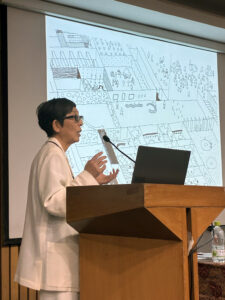
March 17 – Lecture by Kazuyo Sejima (India International Centre, New Delhi)
Kazuyo Sejima delivered a lecture titled “Architecture & the Environment,” reflecting on nearly four decades of architectural practice. The event attracted approximately 150 attendees, including architects, students, and members of the general public.
Beginning with early residential projects, Sejima highlighted her interest in openness, structural clarity, and the relationship between interior and exterior spaces. She illustrated how flexible layouts, terraces, and layered spatial arrangements can balance communal interaction with individual privacy.
As her work expanded to larger cultural and institutional projects, Sejima emphasized themes of transparency, continuity, and integration with landscapes. Museums, universities, and public facilities were presented as fluid environments featuring interconnected spaces, multiple entrances, and abundant natural light.
During the discussion, Sejima addressed materials and sustainability, stressing climate-responsive and regionally appropriate design. She also emphasized the importance of “intermediate spaces” that soften boundaries between interior and exterior environments.
She concluded by noting that architecture should create relationships between people, spaces, and landscapes, providing open frameworks shaped by human activity and evolving with their context.
Lecture 2 Summary
March 18 – Lecture by Kazuyo Sejima (CEPT University, Ahmedabad)
Sejima delivered a second lecture at CEPT University, further elaborating on architecture as a shared space fostering relationships among people, buildings, and the environment. The lecture drew a notably large audience of approximately 800 participants, reflecting strong interest from students, faculty, and professionals.
She reflected on her long-standing connection with India and expressed appreciation for the opportunity to participate in the program. Through early residential projects, she discussed her focus on structural clarity and continuity between indoor and outdoor spaces. Mid-scale works such as dormitories and housing complexes illustrated her efforts to balance communal interaction with individual privacy through terraces, shared spaces, and flexible layouts.
In large-scale cultural and educational projects, Sejima presented architecture as a fluid landscape rather than a fixed object. Multiple entrances, interconnected spaces, and abundant natural light allowed users to move freely and encouraged diverse activities. These designs integrated buildings with their surroundings and reinforced her emphasis on transparency and continuity.
She reiterated the significance of “intermediate spaces” that enable flexibility and social interaction. Concluding the lecture, Sejima emphasized that architecture should provide frameworks shaped by human activity, fostering relationships between people, spaces, and landscapes.
The lecture concluded with an active Q&A session, offering participants an opportunity to exchange views with Sejima. Her responses on non-hierarchical spaces and user-driven experiences further enriched the discussion and reinforced her emphasis on architecture as a shared, dynamic environment.
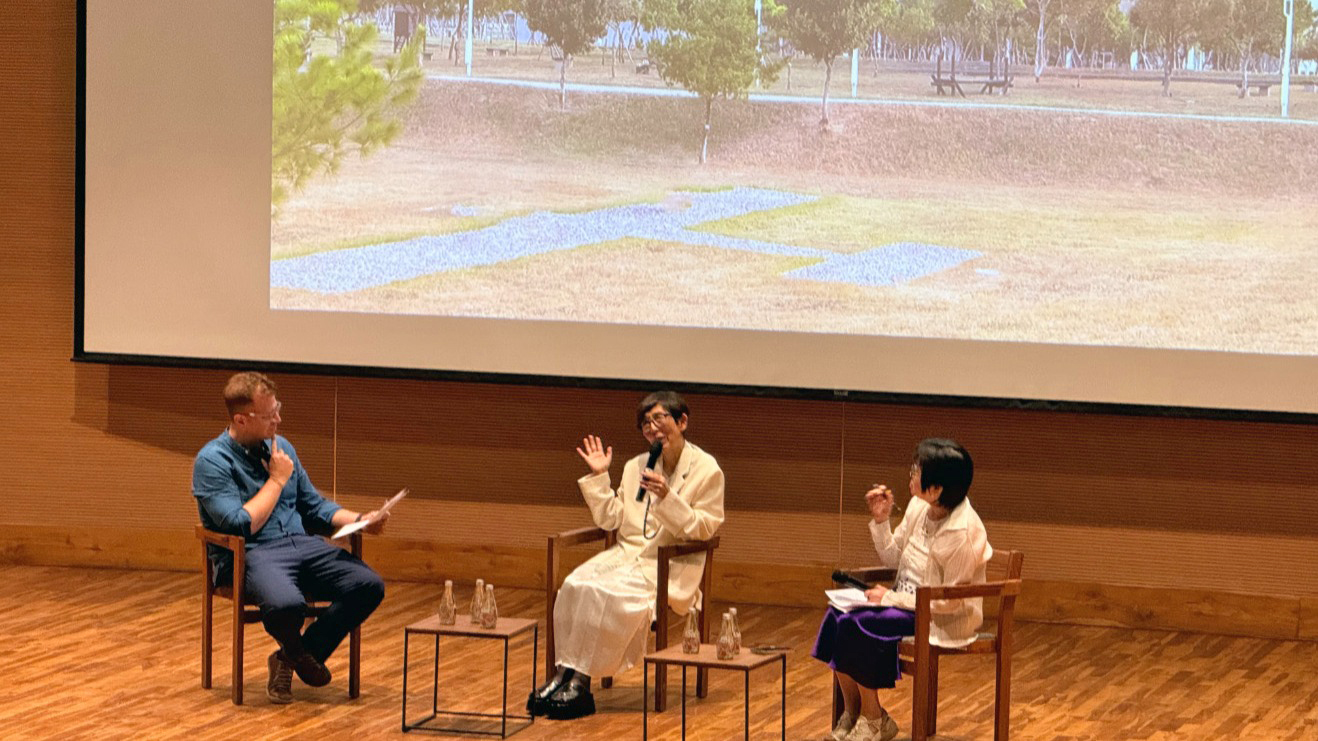
Discussion with Kazuyo Sejima, Prof. Sameep Padora (Dean, Faculty of Architecture, CEPT University), and Yuko Hasegawa (IHJ Art & Design Director)
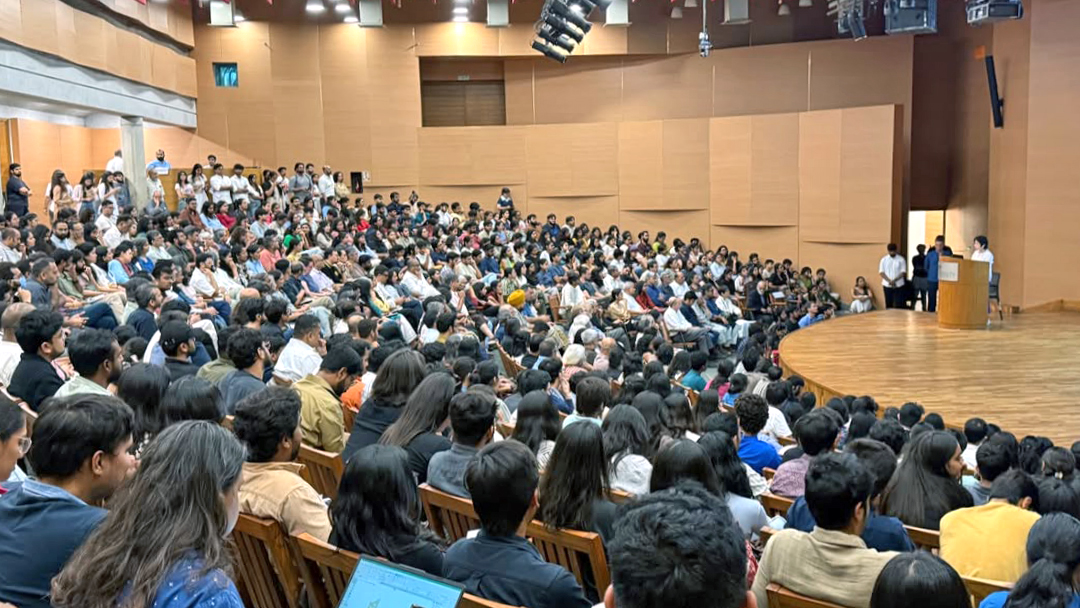
Large audience at Kazuyo Sejima’s lecture
Special Session Summary
March 16 – Special Session by Yuko Hasegawa (New Delhi)
The program opened with a special lecture by Yuko Hasegawa titled “Crafting the Future: Japanese Art Between Tradition and Technology” at the NIV Art Center in New Delhi. Approximately 30–40 participants attended the session, including artists, curators, and cultural practitioners.
Hasegawa explored how contemporary Japanese artists reinterpret traditional craftsmanship through interdisciplinary collaboration and emerging technologies. Drawing on examples involving digital modeling, responsive textiles, and hybrid material practices, she demonstrated how historical techniques can evolve in dialogue with contemporary technological innovation.
She emphasized that craft today extends beyond object-making to include spatial experiences and new material approaches. The lecture also examined animistic sensibilities in Japanese craft traditions, noting parallels with Indian artistic practices that connect nature, spirituality, and technology.
In concluding, Hasegawa highlighted the transition from physical materiality to digital and AI-driven creativity, underscoring the importance of cross-disciplinary and cross-cultural collaboration. Her talk emphasized the potential of Japan–India exchange to generate new approaches to tradition, technology, and contemporary artistic expression.
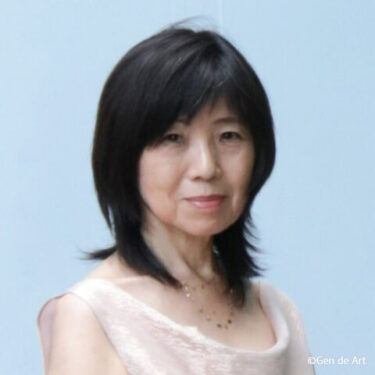
Director, Art and Design
Yuko HASEGAWA
Yuko Hasegawa is a curator, educator and writer based out of Tokyo. She currently holds positions as Director of the 21st Century Museum of Contemporary Art, Kanazawa, Professor Emeritus of Tokyo University of the Arts, Visiting Professor of Research Institute for Humanity and Nature, and Artistic Director of the Inujima Art House Project. She was also Visiting Professor at the Department of Philosophy of Ca’ Foscari University of Venice in 2023, and the Artistic Director of the Museum of Contemporary Art, Tokyo until 2021 where she curated solo exhibitions of Dumb Type, Olafur Eliasson and rhizomatiks among others.
She has curated Japanese contemporary art and media and technology extensively both domestically and internationally. Her curatorial language is interdisciplinary, encompassing not simply art but also architecture, design, science and anthropology, and combined with global curating experience, allows her to view art as part of a single, holistic ecology.
Hasegawa has also curated, either solo or in a joint capacity, international art biennials including the 7th International Istanbul Biennial (2001), the Shanghai Biennale (2002), the 29th São Paulo Biennial (2010), the Sharjah Biennial 11 (2013), and the 7th Moscow Biennale (2017), Thailand Biennale, Korat (2021) and also served as art advisor to the 12th Venice Architecture Biennale (2010).
In parallel with her curating roles, as a professor of curatorial and art theory at the Tama Art University, Tokyo since 2005 until 2016, and professor of Curatorial Studies at the Tokyo University of the Arts Graduate School of Global Arts since 2015 until 2023, Yuko Hasegawa taught students of multiple nationalities, while continuing to construct curatorial theories and contribute to the development of contemporary art discourse from non-western-centric points of view.
Hasegawa has been honored with the Chevalier de l’Ordre des Arts et des Lettres, France (2015), the Ordem de Rio Branco, Brazil (2017), and Japan Commissioner for Cultural Affairs Award, the Agency for Cultural Affairs, Japan (2020).
[Concurrent Positions]
Professor Emeritus of Tokyo University of the Arts
Visiting Professor of Research Institute for Humanity and Nature
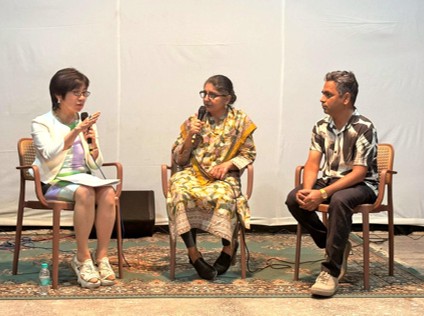
Discussion among Yuko Hasegawa, Rajnish Chhanesh (Contemporary Artist), and Ruchika Wason Singh (Moderator / Visual Artist)
The Japan-India Distinguished Visitors Program 2026 successfully strengthened intellectual and cultural exchange between Japan and India through architecture and art. The lectures by Kazuyo Sejima and Yuko Hasegawa attracted wide interest from professionals, students, and the general public, fostering dialogue on sustainability, tradition, technology, and contemporary design. The strong attendance—ranging from intimate expert discussions to a large university audience—demonstrated the breadth of engagement across different communities.
Archives
Program
Japan-India Programs Lectures & Sessions featuring Kazuyo SEJIMA
Philosophy
Intellectual Dialogue
Program
Japan-India Programs Seminar Series on Contemporary India for Business Persons
Philosophy
Intellectual Dialogue
Program
Japan-India Programs The Role of Sport and Athletes in a Changing World
Philosophy
Intellectual Dialogue

Program
Philosophy
Intellectual Dialogue

Program
Japan-India Programs India’s Technology and New Values: Human Mobility and Space
Philosophy
Intellectual Dialogue
Video
Japan-India Programs Further Changing India: Business, Law, and Women
Philosophy
Intellectual Dialogue
Program
Japan-India Programs Development through Ecological Innovation: Challenging Poverty in India
Philosophy
Intellectual Dialogue
Program
Japan-India Programs India’s New Frontier: Healthcare Technology In Making Social Impact
Philosophy
Intellectual Dialogue
Video
Japan-India Programs Between Nationalism and Internationalism: The Political Philosophy of Rabindranath Tagore
Philosophy
Intellectual Dialogue

Program
Japan-India Programs Is India at a Turning Point?―Trends in India’s Political Economy
Philosophy
Intellectual Dialogue
Related Programs
Arts & Design IHJ Cultural Lobby
Our orderly ways of life have been disrupted in many places around the world, notably in Ukraine and Gaza, and there is little prospect of an early recovery. The issues modern society must consider, s...
Intellectual Dialogue
Arts & Design Architalk: Seeing the World through Architecture
I-House boasts a building constructed under the collaboration of three prominent modern Japanese architects, and from its inauguration has been receiving guests and members from the field of architect...
Intellectual Dialogue
Innovation Asia Leaders Fellowship (ALF)
ALF was established by Teruhide Sato and Lin Kobayashi, both board members of the International House of Japan (IHJ), along with 5 other founding members. Their awareness of the necessity for a dialog...
Intellectual Dialogue
Geoeconomics International Conferences (Japan-Korea-US-China)