
Delve into Japanese Culture @ I-House
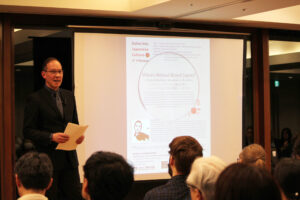
Reading the Japanese Mind Through Waka Poetry with a Focus on The Tale of Genji
Share


*This event has finished.
- Lecturer: Tzvetana Kristeva (Professor, International Christian University)
- Date: Monday, October 2, 2017, 7:00-8:30 pm
- Venue: Matsumoto-Kabayama Room, International House of Japan
- Language: English (without Japanese interpretation)
- Admission: 1,000 yen (500 yen for students; Free for IHJ members and guests staying at I-House on October 1 or 2)
- Seating: 80 (reservations required)

Tzvetana Kristeva
Tzvetana Kristeva is a Bulgarian scholar of classical Japanese literature and the semiotics of culture, with an MA from the University of Moscow and PhDs from both the University of Sofia and University of Tokyo. She has published, in Japanese, a book on the poetic language of classical Japanese literature (Namida noshigaku [The Poetics of Tears], Nagoya University Press, 2001) and a book on Japanese ancient thought interpreted through waka poetry (Kokoro zukushi no nihongo, Chikuma Shinsho, 2011). With Donald Keene, she published Nihon no haiku wa naze sekai bungaku nanoka [Why is Japanese Haiku World Literature?], Zen Shobo, 2014).
Archives
Program
Delve into Japanese Culture @ I-House What’s Behind Brand Japan? — From Hello Kitty, Murakami, to KonMari
Philosophy
Intellectual Dialogue

Program
Delve into Japanese Culture @ I-House Canadian Rakugo Storyteller Katsura Sunshine Talks About the Charms of Rakugo
Philosophy
Intellectual Dialogue
Program
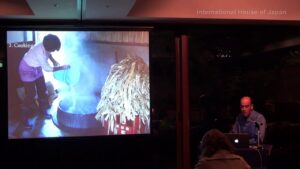
Delve into Japanese Culture @ I-House WASHI: Ancient and Modern Wonder Material
Philosophy
Intellectual Dialogue

Program
Delve into Japanese Culture @ I-House “[Japan Studies Now—Inter-University Center Lecture Series] The Kaleidoscopic Japanese Archipelago: Observations from Fieldwork on Biodiversity”
Philosophy
Intellectual Dialogue
Program
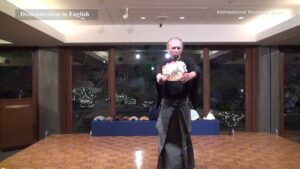
Delve into Japanese Culture @ I-House The Power of Noh: From Japan’s Classical Theater to the World’s Avant-Garde
Philosophy
Intellectual Dialogue

Program
Delve into Japanese Culture @ I-House “[Japan Studies Now—Inter-University Center Lecture Series] Conundrums of Literary Translation”
Philosophy
Intellectual Dialogue
Related Programs
Arts & Design IHJ Cultural Lobby
Our orderly ways of life have been disrupted in many places around the world, notably in Ukraine and Gaza, and there is little prospect of an early recovery. The issues modern society must consider, s...
Intellectual Dialogue
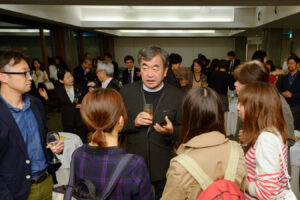
Arts & Design Architalk: Seeing the World through Architecture
I-House boasts a building constructed under the collaboration of three prominent modern Japanese architects, and from its inauguration has been receiving guests and members from the field of architect...
Intellectual Dialogue

Innovation Asia Leaders Fellowship (ALF)
ALF was established by Teruhide Sato and Lin Kobayashi, both board members of the International House of Japan (IHJ), along with 5 other founding members. Their awareness of the necessity for a dialog...
Intellectual Dialogue
Geoeconomics International Conferences (Japan-Korea-US-China)