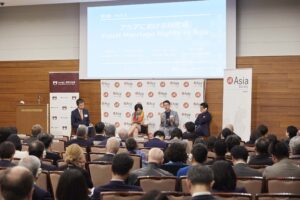
Asia Pacific Young Leaders Program(APYLP)
Religion in Asia: A Possible Role for Peacebuilding
Share


- Speakers:
● Fouzia SAEED (Social Activist; Gender Adviser, UNDP Pakistan)
● Jehan PERERA (Executive Director, National Peace Council of Sri Lanka)
● Somboon CHUNGPRAMPREE (Executive Secretary, International Network of Engaged Buddhists / Thailand)
* Regrettably, Albert E. Alejo (Peace Activist; Assistant Professor, Ateneo de Manila University) has had to cancel his visit to Japan due to unforeseen circumstances. - Moderator: Tadashi OGAWA (Professor, Atomi University)
- Date: Wednesday, September 4, 2019, 6:30–8:30 pm (Doors open at 6:00 pm)
- Venue: Iwasaki Koyata Memorial Hall, International House of Japan
- Co-organized by: Japan Foundation Asia Center
- Supported by: United States-Japan Foundation, MRA Foundation
- Language: English / Japanese (with simultaneous interpretation)
- Admission: Free (Reservations required: seating 180)
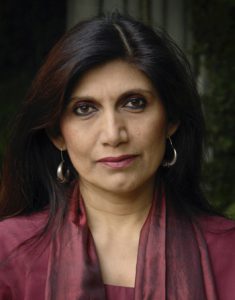
Social Activist; Gender Adviser, UNDP Pakistan
Fouzia SAEED
Dr. Saeed is well known in activist circles in Pakistan, working for the promotion of human rights, democracy and diversity, especially focusing on women and folk culture. For over 30 years, she has developed and headed several organizations and platforms, including Bedari, the first women’s crisis center in Pakistan, and a UNDP Gender Program Unit. Since the late 1990s, she has worked on the issue of sexual harassment at the workplace; her achievements include bringing changes to the work environment in the entire UN system. At the community level, she has helped empower the women of Pakistan suffering at the hands of religious fundamentalists, by illuminating positive dimensions of religion and culture including Sufi traditions. With a Ph.D. from the University of Minnesota, she is the author of Taboo! The Hidden Culture of a Red Light Area (Oxford University Press, 2001), which shed light on the red light area of Pakistan. In 2012, she received the Battle of Crete Award for her three-decade struggle for women’s rights. (ALFP 2010 Fellow)
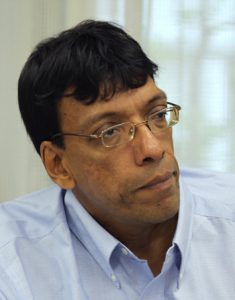
Executive Director, National Peace Council of Sri Lanka
Jehan PERERA
Dr. Perera is the Executive Director of the National Peace Council of Sri Lanka, a nonpartisan and independent peace advocacy group founded in 1995 to facilitate a people’s movement for peace and a negotiated political solution to the ethnic conflict in Sri Lanka. He has also been on the boards of several other civil society organizations, including the People’s Action for Free and Fair Elections (PAFFREL), and served as a member of a government-appointed advisory committee on national integration. He has written extensively on war and peace in Sri Lanka and is a regular political commentator with the Sri Lankan media, writing newspaper columns in English, Sinhala and Tamil. He obtained a Doctor of Law degree from Harvard University, and has received international peace prizes from institutions in Japan, India and Sweeden. (ALFP 2011 Fellow)
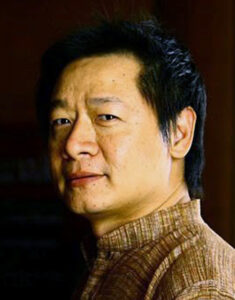
Executive Secretary, International Network of Engaged Buddhists
Somboon CHUNGPRAMPREE (Moo)
Mr. Chungprampree is a Thai social activist working for peace and justice in Asia. Since 2010, he has served as Executive Secretary of the International Network of Engaged Buddhists (INEB), an organization established in 1989 to promote mutual understanding, cooperation and networking among inter-Buddhist and inter-religious social action groups. His activism began while he was at university where he got involved in social movements, especially those focusing on environmental justice. Since 1997, he has held different positions with leading civil society organizations both in Thailand and Asia, and also served on the boards of several international and national foundations. He is the editor of the Seeds of Peace journal issued three times a year. Under the Thai-based Spirit in Education Movement (SEM), his focus has been on grassroots efforts to empower civil society in Myanmar, Laos, Cambodia and Thailand.
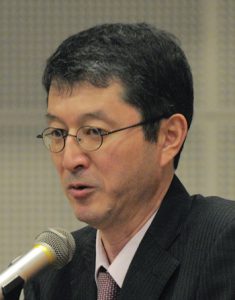
Professor, Atomi University
Tadashi OGAWA
Since entering the Japan Foundation in 1982, Dr. Ogawa has been engaged in international exchange for the enhancement of mutual understanding between Japan and other countries. He has contributed to the development of ALFP since its start-up in the mid-1990s. Prior to joining Atomi University, he served as Director General at the Japan Foundation in New Delhi as well as in Jakarta, and Manager Director for the Planning Department at the Japan Foundation HQ. His research covers international cultural exchange policy, contemporary cultures of Southeast and South Asia, and comparative religion and sociology. He has a Ph.D. from the Graduate School of Asia-Pacific Studies, Waseda University, and has written several books and articles on international politics, particularly focusing on the Islamic world.
Archives
Program
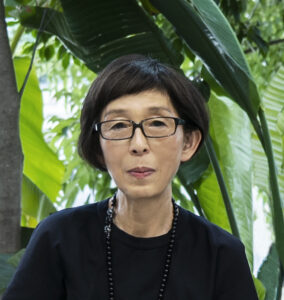
Japan-India Programs Lectures & Sessions featuring Kazuyo SEJIMA
Philosophy
Intellectual Dialogue
Program
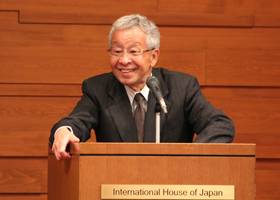
Japan-India Programs Seminar Series on Contemporary India for Business Persons
Philosophy
Intellectual Dialogue

Video
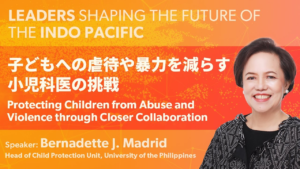
Lecture Series with Indo-Pacific Leaders #3 Protecting Children from Abuse and Violence through Closer Collaboration
Philosophy
Leadership Development
Video
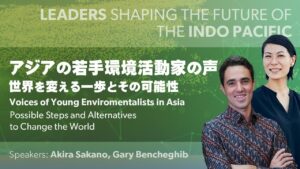
Lecture Series with Indo-Pacific Leaders #2 Voices of Young Environmentalists in Asia: Possible Steps and Alternatives to Change the World
Philosophy
Leadership Development
Video
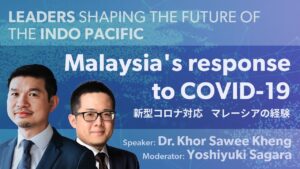
Lecture Series with Indo-Pacific Leaders #1 Malaysia’s Response to COVID-19
Philosophy
Leadership Development

Program
I-House Public Programs: Archives [Peace Symposium Tokyo 2022] Peacemaking at the Intersection of Culture, Art, and Nature
Arts & Design Philosophy
Intellectual Dialogue
Video
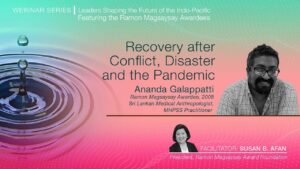
Lecture Series with Indo-Pacific Leaders Recovery after Conflict, Disaster, and the PandemicA Special Tribute to Tetsu Nakamura, 2003 Ramon Magsaysay Awardee
Philosophy
Leadership Development
Related Programs


Philosophy Japan-India Programs
I-House, which has engaged in various exchange activities with India and Indian nationals since its early stages, offers a set of Japan-India exchange programs, including a distinguished visitors’ pro...
Intellectual Dialogue