
Asia Leaders Fellowship (ALF)
About Asia Leaders Fellowship (ALF)


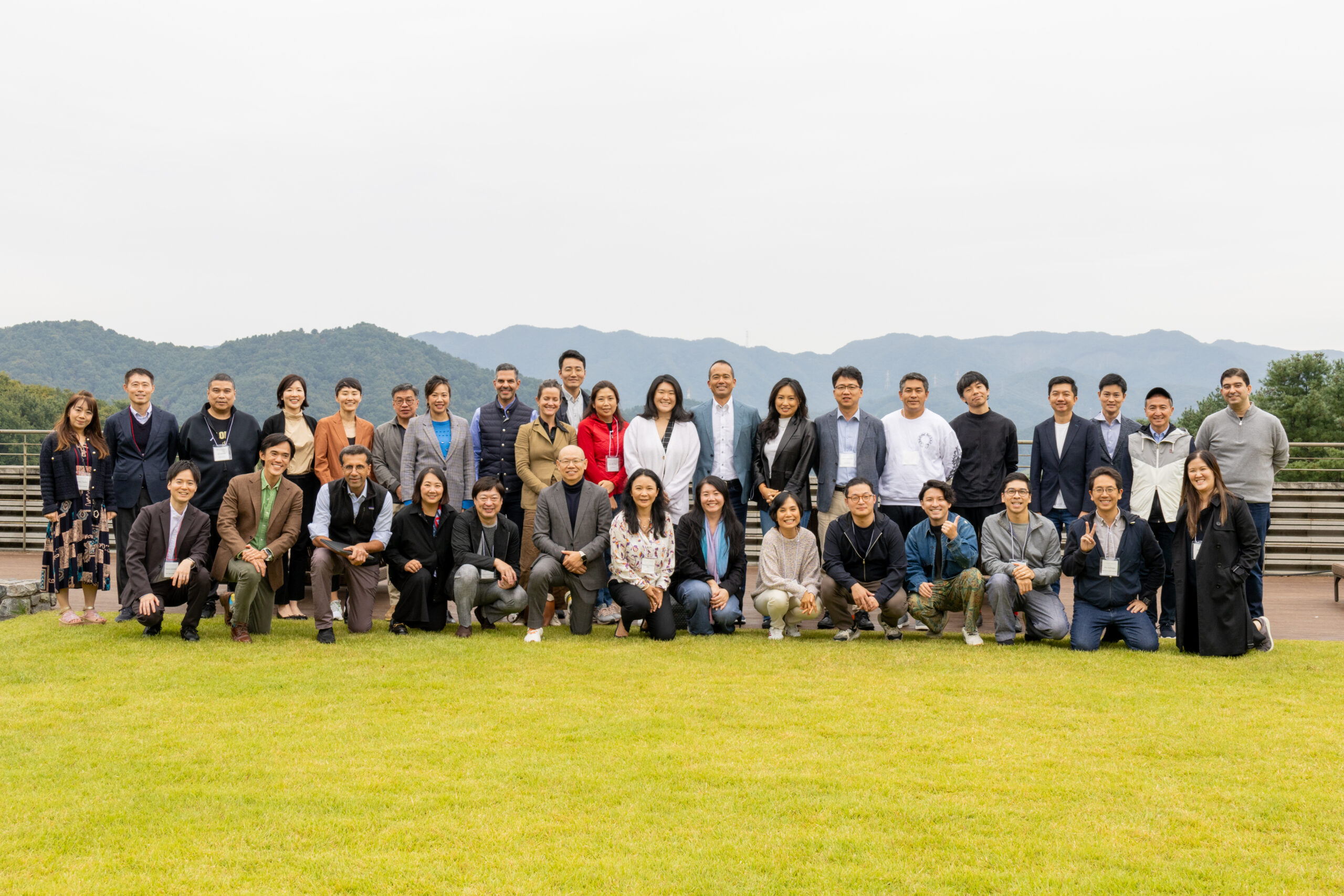
21st century is Asia’s century.
In addition to its significant economic contributions to the world, values cherished by many Asian cultures for centuries—such as humility, collaboration, long-term thinking, and respect for interconnectedness—can positively serve the global community in the challenging times ahead. These values, deeply rooted in the philosophical and ethical traditions of the region, offer a wealth of insights with universal relevance. Principles such as harmony, respect for elders and ancestors, the prioritization of community well-being, and an emphasis on education foster societal cohesion and a strong sense of collective responsibility. These ideals drive progress and stability and promote a balanced and holistic approach to problem-solving. By embracing such perspectives, which often prioritize relationships and interconnectedness, the global community can move toward greater empathy, synergy, and shared progress.
As Asia continues to emerge as a major center of global economic and political influence, there is growing recognition of the need for leadership development programs that resonate with the region’s rich values, traditions, and business practices. Leadership programs that draw upon the diverse cultural and philosophical heritage of Asia can better prepare leaders to navigate the complexities of the region while offering innovative solutions to global challenges. By integrating these enduring principles, such programs can contribute fresh perspectives to the global leadership dialogue, empower new generations of leaders from Asia to lead with cultural authenticity and equip them with a nuanced understanding of the diverse dynamics that shape the region and the world at large.
As such, in 2023, with the support of the International House of Japan and through the collaboration of like-minded leaders from across the region, Asia Leaders Fellowship (ALF) was born.
Our Mission
To shape a collaborative future for Asia that creates generational impact.
We achieve this through:
1. Co-creating a close-knit community of trust and authenticity
2. Deep and direct intra-Asia learning
3. Commitment to join forces to contribute to peace, prosperity, and sustainability in our region.
Key Underlying Question
“How can we become good ancestors?”
This question is closely connected to ALF’s Mission: “To shape a collaborative future for Asia that creates generational impact.” It serves as an important starting point for ALF in reflecting on what kind of impact we wish to leave for future generations.
Whenever new Fellows join ALF, we hold an Ancestor Session. This is, in a sense, a “self-introduction without speaking of yourself.” Unlike a usual self-introduction, Fellows do not speak about their work, position, expertise, or hobbies. Instead, they speak about their ancestors and family history. Through this process, the session becomes an opportunity to reflect not only on “who I am,” but also on “Why am I here now?”
The Ancestor Session was introduced to us by Rev. Shoukei Matsumoto. The session was also held in March 2023, when ALF’s founding members gathered in person for the first time. Since then, “How can we become good ancestors?” has been shared as a question that runs through ALF.
This question is not simply about looking back at our ancestors in the past. Rather, it invites us to recognize that we, too, will one day be seen as “ancestors” by future generations. The choices we make today, the relationships we build, and the future we help shape will each form part of the environment, memories, and possibilities inherited by the next generation.
In this sense, “How can we become good ancestors?” is a question that connects the past, present, and future for ALF. Beginning with reflection on our own roots, it encourages us to become aware of our responsibility across generations and to create collaboration toward the future of Asia. It is ALF’s Key Underlying Question.
Fellow Selections
ALF identifies talent, technology, and capital as the three key pillars driving positive change when they are grounded in good character and a bias for action. Therefore, Asia Leaders Fellows are:
1. Global citizens who are devoted to the region and connectedness to the world.
2. Established entrepreneurs or next-generation leaders who will carry forward their family businesses or legacies.
3. Authentic doers with a strong desire to leave the world to future generations better than the one we found.
4. Fundamentally unselfish people with humility to learn, depth to share, and wisdom to co-evolve with the program.
5. Trusted and trusting leaders who will honor the community’s commitment and each other’s confidentiality.
6. Collaborative leaders with a genuine willingness to build meaningful partnerships and commitment to shared action.
Future Fellow candidates are nominated by current Fellows and reviewed by the Selection Committee in light of the above principles. Official invitations are issued only after final approval by the Executive Committee.
Archives
Program
Asia Leaders Fellowship (ALF) The second annual gathering of the Asian Leaders Fellowship (ALF), a community of “leaders in action,” was held in South Korea.
Innovation
Intellectual Dialogue
Program
Asia Leaders Fellowship (ALF) Asia Leaders Fellowship (ALF) holds an inaugural gathering in Japan
Innovation
Intellectual Dialogue

Program
Innovation
Intellectual Dialogue

Program
Asia Leaders Fellowship (ALF) The Third Annual Gathering of the Asia Leaders Fellowship (ALF) Was Held in Hangzhou and Shanghai, China
Innovation
Intellectual Dialogue
Related Programs


Arts & Design IHJ Cultural Lobby
Our orderly ways of life have been disrupted in many places around the world, notably in Ukraine and Gaza, and there is little prospect of an early recovery. The issues modern society must consider, s...
Intellectual Dialogue

Arts & Design Architalk: Seeing the World through Architecture
I-House boasts a building constructed under the collaboration of three prominent modern Japanese architects, and from its inauguration has been receiving guests and members from the field of architect...
Intellectual Dialogue
Innovation Asia Leaders Fellowship (ALF)
ALF was established by Teruhide Sato and Lin Kobayashi, both board members of the International House of Japan (IHJ), along with 5 other founding members. Their awareness of the necessity for a dialog...
Intellectual Dialogue