
Japan-India Programs
Development through Ecological Innovation: Challenging Poverty in India
Share


- *The program featured on this page has concluded.
Speaker: Anshu Gupta, Founder, Goonj
Commentator: James Kondo, Trustee,
International House of Japan
Date: Friday, September 8, 2017, 6:30pm (Doors open at 6:00pm)
Venue: Iwasaki Koyata Memorial Hall, International House of Japan
Co-sponsored by: Shahani Associates Limited
Language: English/Japanese (with simultaneous interpretation)
Admission: Free (reservations required)
With a population of over 1.3 billion, India is registering continued economic growth. As a fast-growing economy, India is also grappling with a growing gap between urban prosperity and rural poverty. Mr. Gupta is innovatively using under-utilized urban cloth and other surplus materials in Indian cities as a powerful tool for social change, a huge resource for development and a valuable asset for income generation for rural India. He has brought attention to a new economic model and evolved new currencies for development with a non-market approach. Widely credited for his creative vision in transforming the culture of giving in India and weaving together a country-wide system from the cities to the villages to create empowerment and development in rural India, Mr. Gupta will share his ideas on the future of India and the role of social entrepreneurs in a global society.
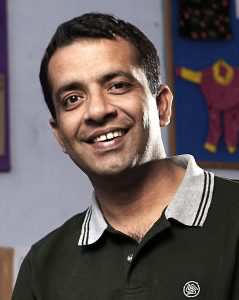
Founder, Goonj
Anshu Gupta
Mr. Gupta received the prestigious Ramon Magsaysay Award in 2015 for “his creative vision in transforming the culture of giving in India, his enterprising leadership in treating cloth as a sustainable development resource for the poor, and in reminding the world that true giving always respects and preserves human dignity.” Earlier he also had won recognition as an Ashoka and Schwab Fellow while being listed as one of India’s top social entrepreneurs by Forbes Magazine. He speaks passionately in national and international forums on non-issues troubling the world and how the big problems have small solutions, if we don’t treat people like donors and beneficiaries but treat them as stakeholders. His mantra is “we don’t want to grow as an organization, we want to grow as an idea and we are here to support people who replicate the idea of Goonj in different eco-systems and geographies.” In large parts of Asia, there is a lot to learn from the successful large-scale and innovative disaster relief and rehab models of Goonj.
Goonj Official Website: goonj.org

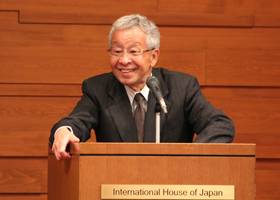
Trustee, International House of Japan
James Kondo
Mr. Kondo is a technology executive, social entrepreneur, academic and policy expert. In the technology arena, Mr. Kondo is Senior Advisor at Geodesic Capital, a venture capital based in Silicon Valley. He is also Co-Chairman of Silicon Valley Japan Platform and Visiting Scientist at MIT Media Lab. He was formerly Vice President of Twitter Inc. and Chairman of Twitter Japan. In the social sector, Mr. Kondo co-founded TABLE FOR TWO, a Davos-initiated social program that simultaneously addresses global hunger and obesity. TABLE FOR TWO partners with over 500 companies and restaurants and has delivered over 50 million school meals to children suffering from hunger. He also co-founded Beyond Tomorrow, a youth leadership and scholarship program founded after the Tohoku earthquake. In the academic sector, Mr. Kondo is Visiting Professor at Graduate School of International Corporate Strategy at Hitotsubashi University. In the policy sector, Mr. Kondo was Special Advisor at the Cabinet Office and Director at the Prime Minister’s Office of the Government of Japan. He is President of Asia Pacific Initiative Foundation, a think-tank based in Tokyo. Mr. Kondo has been selected as a Young Global Leader, New Asian Leader, and a member of Global Agenda Council at the World Economic Forum. Mr. Kondo is a graduate of Keio University and Harvard Business School, and was a Yale World Fellow.
Commemorating the 60th anniversary of Japan-India diplomatic relations in 2012, the Japan-India Distinguished Visitors Program was launched with the hope to strengthen the relationship between the people of both countries. The program invites eminent Indian public figures from various fields who are proposing new values or innovative ideas to change the status quo of society. During their stay for a week, the fellows engage in one public lecture, as well as dialogue and discussions with the counterparts and leaders who are tackling similar issues in Japan in their area of expertise.

Archives
Program
Japan-India Programs Lectures & Sessions featuring Kazuyo SEJIMA
Philosophy
Intellectual Dialogue
Program
Japan-India Programs Seminar Series on Contemporary India for Business Persons
Philosophy
Intellectual Dialogue

Program
Japan-India Programs The Role of Sport and Athletes in a Changing World
Philosophy
Intellectual Dialogue

Program
Philosophy
Intellectual Dialogue

Program
Japan-India Programs India’s Technology and New Values: Human Mobility and Space
Philosophy
Intellectual Dialogue

Video
Japan-India Programs Further Changing India: Business, Law, and Women
Philosophy
Intellectual Dialogue

Program
Japan-India Programs India’s New Frontier: Healthcare Technology In Making Social Impact
Philosophy
Intellectual Dialogue
Video
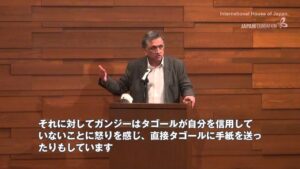
Japan-India Programs Between Nationalism and Internationalism: The Political Philosophy of Rabindranath Tagore
Philosophy
Intellectual Dialogue

Program
Japan-India Programs Is India at a Turning Point?―Trends in India’s Political Economy
Philosophy
Intellectual Dialogue
Related Programs
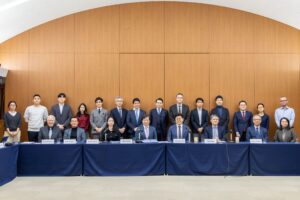


Arts & Design IHJ Cultural Lobby
Our orderly ways of life have been disrupted in many places around the world, notably in Ukraine and Gaza, and there is little prospect of an early recovery. The issues modern society must consider, s...
Intellectual Dialogue
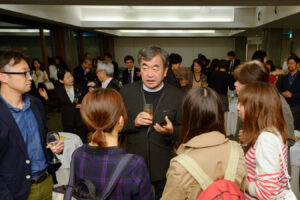
Arts & Design Architalk: Seeing the World through Architecture
I-House boasts a building constructed under the collaboration of three prominent modern Japanese architects, and from its inauguration has been receiving guests and members from the field of architect...
Intellectual Dialogue

Innovation Asia Leaders Fellowship (ALF)
ALF was established by Teruhide Sato and Lin Kobayashi, both board members of the International House of Japan (IHJ), along with 5 other founding members. Their awareness of the necessity for a dialog...
Intellectual Dialogue
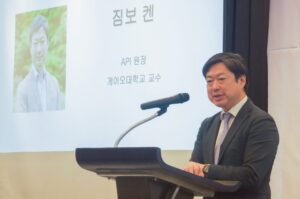
Geoeconomics International Conferences (Japan-Korea-US-China)