
Nichibunken-IHJ Forum
[Nichibunken-IHJ Forum] Yokai (Monsters) and the Japanese Imagination
Share


Index
- *The program featured on this page has concluded.
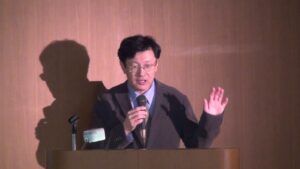
Lecturer: Komatsu Kazuhiko
(Director-General, International Research Center for Japanese Studies [Nichibunken])
Date: Friday, September 19, 2014, 6:00-7:30 pm
Venue: Lecture Hall, International House of Japan
Language: Japanese (without English interpretation)
Co-organized by: International Research Center for Japanese Studies (Nichibunken)
Admission: Free
Seating: 140 (Seats on a lottery basis. Registration up to 2 persons.)
Registration Deadline: August 12, 2014
(Applicants selected will be informed by the end of August.)
I-House is starting a series of forums in collaboration with Nichibunken to deepen the understanding of contemporary Japan from various perspectives. For the first forum, Professor Komatsu, a leading expert in yokai (monsters) research, will be the speaker.
Yokai has been widely received as a part of contemporary Japanese culture. The culture of yokai in Japan is a rich one and is a major current underlying the imagination and creativity of the Japanese people. Professor Komatsu will talk about how its unique characteristics and charm are used in contemporary creative activities in Japan.
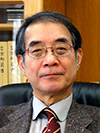
Komatsu Kazuhiko
Specializes in Cultural Anthropology and Folklore. Born in 1947 in Tokyo. He had been a professor at the International Research Center for Japanese Studies from 1997 and assumed his current position in 2012. Received the Medal with Purple Ribbon in 2013. His books include Yokai gaku shinkou (New Thoughts on Yokai), and “Densetsu” wa naze umaretaka (Why Were Legends Made?) (Kadokawa Gakugei).
Report
From antiquity, the Japanese have personified supernatural phenomena, giving them physical shape and form, and portraying them in pictures and in tales, beginning as early as the Kojiki and the Nihon shoki, the historical chronicles of the Nara period (710–94), and the illustrated narrative scrolls, or emaki, of the Heian period (794–1185). A variety of types and forms of yokai also appear in popular legend—kappa (water sprites), tengu (long-nosed goblins), zashiki warashi (household spirits), and others. Over time yokai became divided into three major categories: (1) yokai such as orochi (giant serpents) and kitsune (fox spirits) deriving from the natural world; (2) yokai such as tsukumogami that were supernatural transformations of everyday tools; and (3) transformations of human beings into yokai (ghosts, etc.).
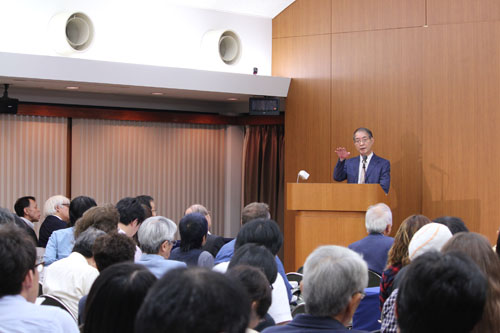
What is common to all varieties of yokai, in Komatsu’s analysis, is the animism at the root of traditional Japanese religious beliefs. Spirits inhabit all things, and can transform for good or ill within the context of their relationship with human beings. Yokai are a concrete manifestation of the harmful capacity of spirits, and as residents of the “dark side” of the history of Japanese religion and folk belief, are a deeply interesting subject for research.
Such monsters appear frequently in the folklore of all areas of Japan subject to natural disasters such as landslides, floods, tsunami, and typhoons. Komatsu stressed that legends and folktales have importance as a means of transmitting memory and wisdom concerning natural disasters, which should be studied, not just from the standpoint of the natural sciences, but also from the perspective of folklore and yokai studies. A valuable first step, Komatsu suggested, would be incorporating information on folklore, rituals, and other commemorative devices (shrines, stelae, etc.) into a hazard map database.
Archives

Program
Philosophy
Intellectual Dialogue
Program
Nichibunken-IHJ Forum “[Nichibunken-IHJ Forum] The Fate of Hikaru Genji and the “Two Fathers”— The Tale of Genji Seen Through the Life of Buddha”
Philosophy
Intellectual Dialogue
Program
Nichibunken-IHJ Forum [Nichibunken-IHJ Forum] Foreign Languages in the Formation of Shiga Naoya’s Literature
Philosophy
Intellectual Dialogue
Program
Nichibunken-IHJ Forum [Nichibunken-IHJ Forum] Reexamining the Last 500 Years of World History from a “Pirate View” : ― The Reverse Side of the Oceanic View of Civilization
Philosophy
Intellectual Dialogue

Program
Nichibunken-IHJ Forum [Nichibunken-IHJ Forum] The Tale of Genji as World Literature
Philosophy
Intellectual Dialogue
Related Programs
Arts & Design IHJ Cultural Lobby
Our orderly ways of life have been disrupted in many places around the world, notably in Ukraine and Gaza, and there is little prospect of an early recovery. The issues modern society must consider, s...
Intellectual Dialogue
Arts & Design Architalk: Seeing the World through Architecture
I-House boasts a building constructed under the collaboration of three prominent modern Japanese architects, and from its inauguration has been receiving guests and members from the field of architect...
Intellectual Dialogue
Innovation Asia Leaders Fellowship (ALF)
ALF was established by Teruhide Sato and Lin Kobayashi, both board members of the International House of Japan (IHJ), along with 5 other founding members. Their awareness of the necessity for a dialog...
Intellectual Dialogue
Geoeconomics International Conferences (Japan-Korea-US-China)