
I-House Ushiba Fellowship
Share


About Ushiba Fellowship
Inviting distinguished contemporary thinkers to Japan for the purpose of bringing humankind closer together and transcending the North-South/East-West divides, this short-term exchange of persons program aims at encouraging cultural dialogue for examining global agendas of the 21st century from a critical and alternative perspective.
Fellows
Cultural Critic
Gayatri Chakravorty Spivak
Born in Calcutta, India, in 1942. Received a B.A. in English (Honors) from Presidency College, Calcutta, and a Ph.D. from Cornell University for her dissertation on W. B. Yeats, under the supervision of Paul de Man, cultural critic. Critically intervening the politics working behind the production of knowledge and the system of representation as discourse in relation to power arrangements, Professor Spivak is regarded as a leading cultural critic and a public intellectual of our times.
Widely cited in a range of disciplines, her major writings and publications include Of Grammatology (translation, with critical introduction, of Derrida’s text) (1976), In Other Worlds: Essays in Cultural Politics (1987), Selected Subaltern Studies (edited with Ranajit Guha) (1988), The Post-Colonial Critic (1990), The Spivak Reader (1995), A Critique of Postcolonial Reason: Towards a History of the Vanishing Present (1999), Death of a Discipline (2005), and Other Asias (2007).
Professor, University of California, Davis
G. William Skinner
With the employment of an anthropological research method, Prof. Skinner has made an in-depth and groundbreaking study of Chinese society in Southeast Asia and of rural Chinese economic systems, thereby spearheading the advancement of Asian Studies in postwar America. Currently, he is engaged in interdisciplinary research on spatial analyses of regional systems in Asia. Before taking his current post, Prof. Skinner taught at Cornell University, Stanford University and other universities. His major publications include Chinese Society in Thailand: Analytical History (Cornell University Press, 1957)

Distinguished Professor, University of California, Santa Cruz
James Clifford
James Clifford is a world-renowned cultural critic and “post-modern” anthropologist whose work has challenged conventional academic norms and methods, contributing to postcolonial critiques of Euro-centric epistemologies. He received his Ph.D. in history from Harvard University, and has taught since 1978 in the interdisciplinary History of Consciousness doctoral program at the University of California, Santa Cruz. He has also served as a visiting professor of anthropology at University College London and Yale University. Throughout his professional career, Dr. Clifford has published books and essays that are widely translated and frequently cited in many areas of the arts and culture. They include Writing Culture: The Poetics and Politics of Ethnography (Co-edited with George Marcus, University of California Press, 1986), The Predicament of Culture: Twentieth Century Ethnography, Literature and Art (Harvard University Press, 1988), and Routes: Travel and Translation in the Late Twentieth Century (Harvard University Press, 1997).
Writer/Essayist
Arundhati Roy
After studying architecture at the School of Planning and Architecture, New Delhi, Ms. Roy started her professional career as a writer of screenplays and later published her first, semi-autobiographical novel, The God of Small Things (Flamingo, 1997), which won the Booker Prize and brought her to international prominence. A publicly engaged writer, Ms. Roy has written about issues ranging from India’s nuclear test, big dams, neo-liberalism, the American wars in Iraq and Afghanistan, and India’s military occupation of Kashmir to, most recently, the civil war unfolding in Central India. For her work in freedom and justice, she received the Cultural Freedom Prize awarded by the Lannan Foundation in 2002, and in recognition of her social campaigns and advocacy of nonviolence, she was given the Sydney Peace Prize in 2004. Her major publications include The Algebra of Infinite Justice (Flamingo, 2002), An Ordinary Person’s Guide to Empire (Consortium, 2004), The Shape of the Beast: Conversations with Arundhati Roy (New Delhi: Penguin, Viking, 2008), and Listening to Grasshoppers: Field Notes on Democracy (New Delhi: Penguin, Hamish Hamilton, 2009). Broken Republic is forthcoming.
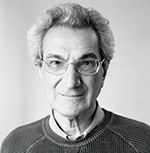
Philosopher
Antonio Negri
Born in Padua, Italy, 1933. Starting off his academic career as a scholar of political philosophy centering on Marx, Mr. Negri shaped the theoretical foundation for a new social movement known as Autonomia, supported by the socially disadvantaged. As an eminent scholar, he has held teaching positions at University of Padua, École Normale Supérieure, I’Université de Paris VII,VIII, and Collège International de Philosophy. In the widely acclaimed works of Empire and Multitude in co-authorship with Michael Hardt, Mr. Negri grasped the new political global order, which emerged with the acceleration of globalization, as Empire, and reconfigured it as a de-centralized network system of domination, which differs from the sovereignty of traditional nation-states presupposing physical territory and which accepts no boundaries or limits. In so doing, Mr. Negri conceptualized Multitude as the democratic forces and alternative paradigm to resist against the new imperial order and the power of Empire. His major publications include Empire (co-authored with Michael Hardt, Harvard University Press, 2000) and Commonwealth (co-authored with Michael Hardt, Harvard University Press, 2009)
Photo Copyright: David Balicki (Represented by Le Bureau des Copyrights Français)
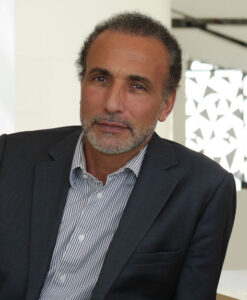
Professor, Oxford University
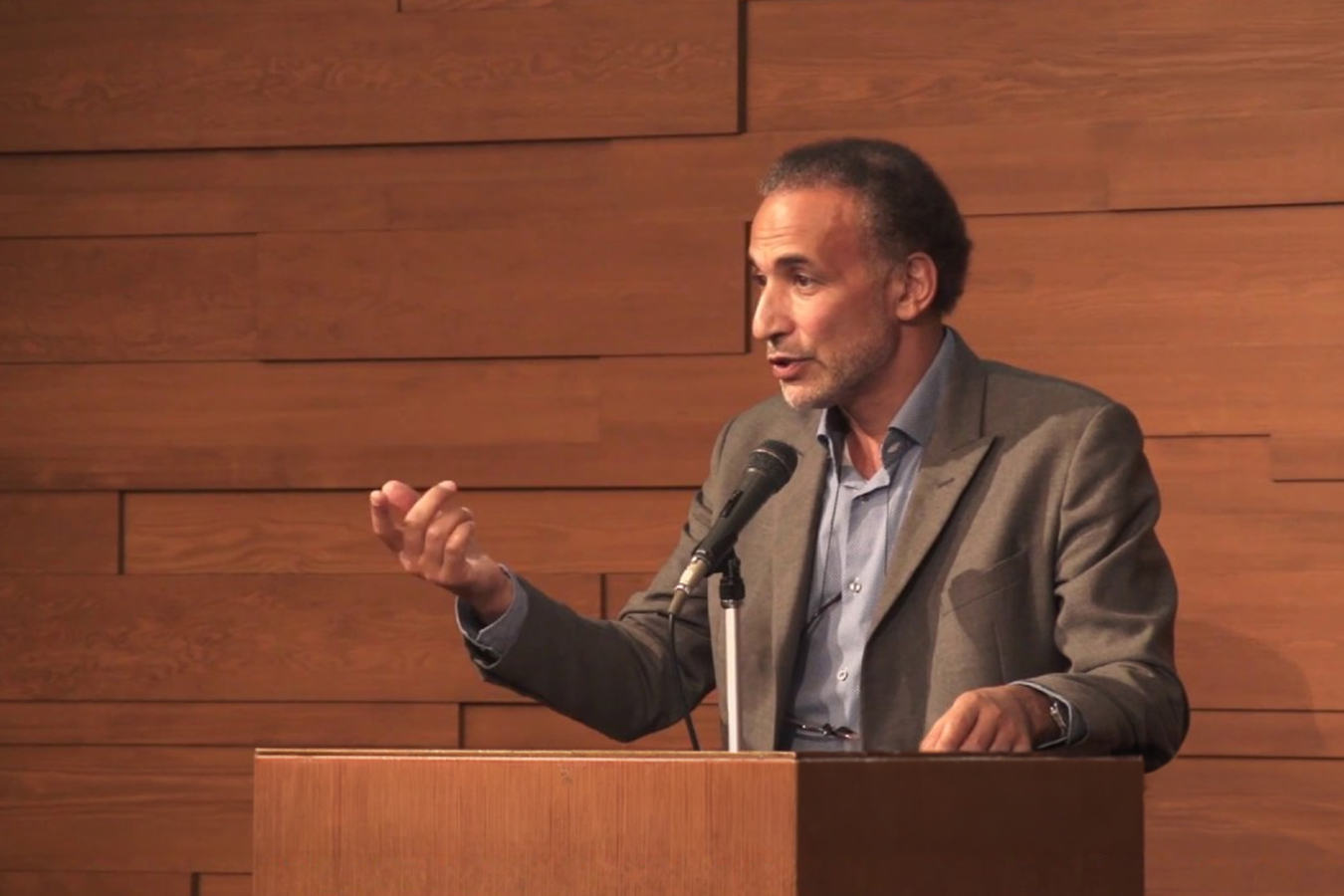
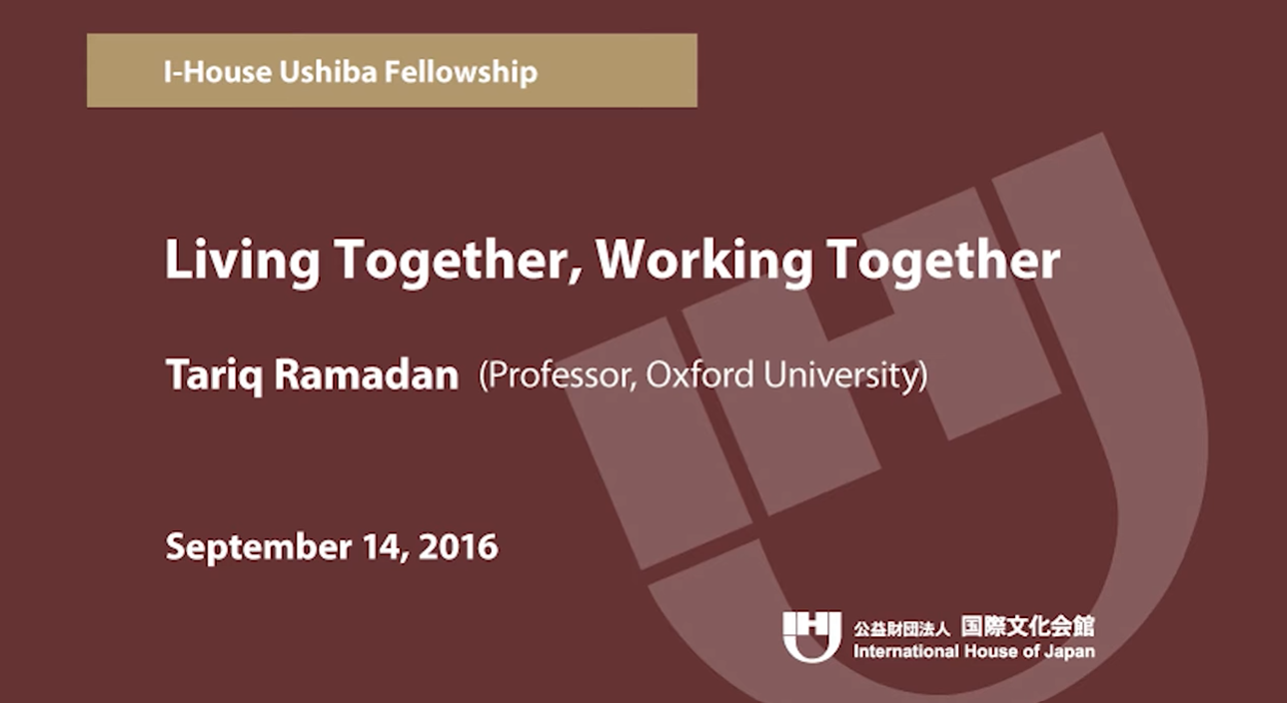
Tariq Ramadan
A Professor of Contemporary Islamic Studies at the Oxford University (Oriental Institute, St Antony’s College) and also teaches at the Oxford Faculty of Theology.
Prof. Ramadan holds an MA in Philosophy and French literature and Ph.D. in Arabic and Islamic Studies from the University of Geneva. In Cairo, Egypt he received one-on-one intensive training in classic Islamic scholarship from Al-Azhar University scholars (ijazat in seven disciplines).
Through his writings and lectures Tariq has contributed to the debate on the issues of Muslims in the West and Islamic revival in the Muslim world. He is active at academic and grassroots levels lecturing extensively throughout the world on theology, ethics, social justice, ecology and interfaith as well intercultural dialogue. He is President of the European think tank: European Muslim Network (EMN) in Brussels.
Prof. Ramadan is also Visiting Professor at the Faculty of Islamic Studies, (Qatar) and the University of Malaysia Perlis; Senior Research Fellow at Doshisha University (Kyoto, Japan) and Director of the Research Centre of Islamic Legislation and Ethics (CILE) (Doha, Qatar). He is a member of the International Union of Muslim Scholars.
Prof. Ramadan’s books include Islamic Ethics: A Very Short Introduction (Oxford University Press, in press); The Essential introduction to Islam: Spirituality, Fundamentals, History (Pelican Series, Penguin, in press); Islam and the Arab Awakening (OUP USA, 2012); The Arab Awakening: Islam and the New Middle East (Penguin, 2012); The Quest for Meaning, Developing a Philosophy of Pluralism (Penguin, 2010); What I Believe (OUP USA, 2009); Radical Reform, Islamic Ethics and Liberation (OUP USA, 2008); and Au peril des idées (French) with Edgar Morin (Presses du Châtelet, 2014).
Archives
Living Together, Working Together
Dialogue in Japan with Antonio Negri
Arundhati Roy

Archives

Program
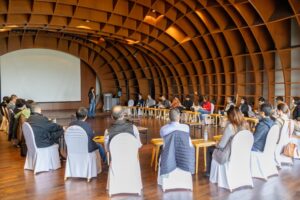
Asia Leaders Fellowship (ALF) The second annual gathering of the Asian Leaders Fellowship (ALF), a community of “leaders in action,” was held in South Korea.
Innovation
Leadership Development
Program
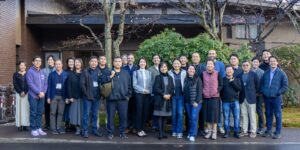
Asia Leaders Fellowship (ALF) Asia Leaders Fellowship (ALF) holds an inaugural gathering in Japan
Innovation
Leadership Development

Program
Innovation
Leadership Development
Program
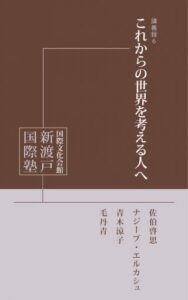
Nitobe Leadership Program The lecturers of the Nitobe Leadership Program
Innovation
Leadership Development

Related Programs
Innovation Asia Leaders Fellowship (ALF)
ALF was established by Teruhide Sato and Lin Kobayashi, both board members of the International House of Japan (IHJ), along with 5 other founding members. Their awareness of the necessity for a dialog...
Leadership Development
main-300x200.jpg)
Innovation Philosophy English Communication Seminar