Built Environment and Lifestyle
A Healthy Living Environment
Share


- *The program featured on this page has concluded.
Designing houses that can withstand Japan’s intensely humid summers and bitterly cold winters is a challenge. Traditionally, Japanese houses are built with the damp and tropical months of July and August in mind, with flimsy walls, paper divisions and drafty corridors to increase airflow and prevent mold—but at the expense of the inhabitants’ comfort during the colder months. MLIT found in a 2012 survey that the proportion of houses that met energy-saving standards was just 5 percent and a whole 39 percent of houses were un-insulated.
While most people cope by blasting air conditioning in the room they are using or huddling under heated tables known as kotatsu, going from a hot room into a cold one can cause “heat shock”, which kills more elderly people every year than car accidents.
Enter the LCCM home, which “changes its clothes” through the seasons to adapt to the extreme swings in temperature and humidity. The house, devised by a team of architects and researchers funded by the government, sheds its outer windows in summer and slips on a coat of wooden slats instead to create a cool enclosed space under the eaves, with a “buffer” zone preventing the rest of the house from getting too hot. In the winter, the windows close to trap solar heat and warm the house.
Although LCCM’s original remit was environmental—the researchers were aiming to make a house that absorbed more carbon than it emits over its entire life cycle from construction to demolition—homebuyers are rarely swayed by only eco credentials.
Touting health benefits, on the other hand, is a sure-fire way to get consumers interested, says Akihisa Iida, the CEO of OM Solar, a company that have patented a type of “passive house” using solar heat, which is better suited to Japan’s humid climate and ample sunlight than German or Scandinavian passive houses.
Ichijo Homes knows that well: the Japanese homebuilder’s ultra airtight houses were the first in Australia to win recognition from the National Asthma Council for their superior air quality thanks to an HVAC system that filters out pollen and dust — an accolade that has left the company with such a long waiting list they are now turning down interview requests.
All three houses are at the cutting edge of a movement to promote healthy housing in Japan, an oft-overlooked goal during the country’s high-growth period and one that has been difficult to achieve until now without using a lot of energy-intensive air conditioning. As the country now concentrates on quality over quantity in housing, the emphasis on healthy homes is growing. Japan may have come late to the idea of healthy housing, but its contributions to the genre look likely to gain traction fast.
<Interviewees>
Shuzo Murakami: President of the Institute for Building Environment and Energy Conservation (http://www.ibec.or.jp/murakami_profile.html), Professor Emeritus at the University of Tokyo
Akihisa Iida: CEO of OM Solar (http://www.omsolar.net/en/)
Tsuyoshi Seike: Associate professor at the Graduate School of Frontier Sciences at the University of Tokyo
Masao Koizumi: Founder of architectural practice Koizumi Atelier, professor of engineering at the Department of Architecture and Building Science at the Tokyo Metropolitan University and researcher for LCCM (Life Cycle Carbon Minus) home
Archives

Program
Asia Leaders Fellowship (ALF) The second annual gathering of the Asian Leaders Fellowship (ALF), a community of “leaders in action,” was held in South Korea.
Innovation
Leadership Development
Program
Asia Leaders Fellowship (ALF) Asia Leaders Fellowship (ALF) holds an inaugural gathering in Japan
Innovation
Leadership Development

Program
Innovation
Leadership Development
Program
Nitobe Leadership Program The lecturers of the Nitobe Leadership Program
Innovation
Leadership Development
Program
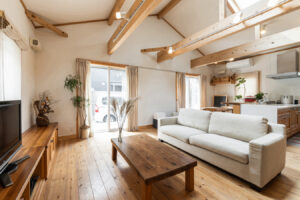
Built Environment and Lifestyle Dealing with an Aging Population At Home
Innovation
Policy Research
Related Programs