
2026.04.02
International House of Japan Launches New Research Institute for Advanced Innovation and GeoStrategy (RAIS)
Share


News Category
New think tank bridges advanced technology and national security through interdisciplinary research, industry collaboration, and international partnerships
TOKYO, Japan — The International House of Japan (IHJ), a public interest foundation headquartered in Minato-ku, Tokyo, today announced the establishment of the Research Institute for Advanced Innovation and GeoStrategy (RAIS). The institute is co-directed by Professor Tomoyuki Furutani, Faculty of Policy Management, Keio University and Ken Jimbo, Managing Director (Representative Director) of the International House of Japan.
As global competition over advanced technologies intensifies, the security landscape has expanded well beyond conventional military domains to encompass technologies, economics, and the information space. RAIS advances security research led by cutting-edge technologies, drawing on a network of specialists in AI, statistics, engineering, law, and economics to deliver security policy recommendations and help build a robust innovation ecosystem.
Message from the Co-Directors
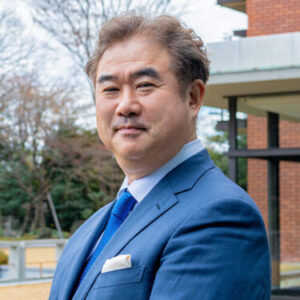
Tomoyuki Furutani | Director, IHJ; Professor, Faculty of Policy Management, Keio University
The most distinctive feature of RAIS is its truly interdisciplinary approach — bringing together researchers at the frontier of emerging technologies, alongside specialists in international relations and law, to conduct empirical research and develop actionable policy recommendations. This sets us apart from conventional security think tanks. In the field of artificial intelligence, our dedicated team of AI and data science experts enables us to pursue cross-cutting research spanning social media data analysis, satellite imagery interpretation, and the development of AI-driven tools and technologies.
At RAIS, technology-driven security research forms the cornerstone of our mission. We are committed to playing a central role in building Japan’s defense and security innovation ecosystem — advancing collaborative research with government agencies, international partners, and a broad range of private-sector organizations from prime contractors to cutting-edge startups. At the same time, we are deeply invested in cultivating the next generation of researchers who can operate effectively across multiple domains.
We look forward to your continued support of RAIS.
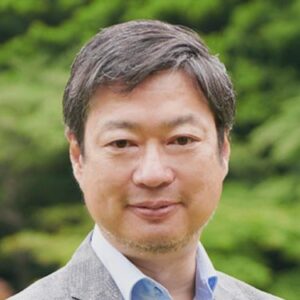
As emerging technologies such as AI, quantum, space, cyber, and biotechnology become ever more deeply intertwined with national security, they are transforming the very character of conflict and the future of the battlefield. The Research Institute for Advanced Innovation and GeoStrategy (RAIS), newly established by the International House of Japan, has been created to address this new strategic landscape. Moving beyond the traditional boundaries of security and defense studies, RAIS will bring together researchers and practitioners across science, technology, and policy to explore the foundations of security strategy for a new era. By strengthening ties with leading research institutions and policy communities worldwide, RAIS also aims to foster the intellectual foundation and practical network linking government, industry, and academia, while contributing strategic ideas from Japan to the world.
About RAIS
| Organization Name | Research Institute for Advanced Innovation and GeoStrategy (RAIS) |
|---|---|
| Research Domain | Interdisciplinary research on advanced technologies and security |
| Key Activities | 1. Integrated research on advanced technologies and security 2. Industrial research consortia 3. International partnerships and policy recommendation 4. Talent development programs |
| Structure | 1. AI and Security Research Group 2. Technologies, Resources, and Human Capital Research Group 3. Information Warfare Research Group |
Three Defining Features about RAIS
1. Interdisciplinary Research on Advanced Technologies and Security
RAIS brings together experts in AI, data analytics, statistics, law, and international relations to build an interdisciplinary research framework. By integrating the analysis of advanced technologies and security, we are pioneering new frontiers in policy research.
2. Co-Creative Platform Bridging Research and Industry
RAIS forges partnerships with businesses, research institutions, and government agencies to establish collaborative research consortia. By connecting research activities with the needs of industries, we seek to accelerate technological innovation and foster new industries in the field of national security.
3. Global Knowledge Network
Through partnerships with overseas research institutions, universities, and governments, RAIS builds an international security research network. By sharing our research findings from a global perspective, the institute aims to contribute to Japan’s policymaking and international cooperation.
Research Groups
1. AI and Security Research Group
Examining the impact of advances in AI technology on the security environment. Our research focuses on themes including AI-driven military strategy analysis, AI security policy, and the reliability assessment of AI systems.
2. Technologies, Resources and Human Capital Research Group
Analyzing trends in advanced technologies, critical resources, and human capital relevant to national security, conducting research on Japan’s technology security policies and institutional design. Our areas of study include AI-driven systems and the international competitive landscape surrounding critical technologies.
3. Information Warfare Research Group
Analyzing political and security dynamics in the information space by leveraging diverse data sources such as social media and satellite data. Our work encompasses OSINT data analysis and research into methodologies for analyzing information warfare. By integrating the insights generated across these research groups, RAIS delivers policy recommendations and public outreach on security strategies for the age of advanced technologies.
Co-Director Biographies
Tomoyuki Furutani, Ph.D.
Professor, Faculty of Policy Management, Keio University; Director, International House of Japan. Dr. Furutani holds a doctoral degree in Engineering from the Graduate School of Engineering, University of Tokyo. His research specialties include advanced technology and security, applied statistics, and urban engineering. He has served as a visiting professor at Chulalongkorn University (Thailand) and the University of Vienna (Austria)
Ken Jimbo, Ph.D.
Managing Director (Representative Director), International House of Japan. Dr. Jimbo holds a doctoral degree in Policy and Media from the Graduate School of Media and Governance, Keio University. His research focuses on international politics, security studies, Asia-Pacific security, and Japan’s foreign and defense policy. He served as an Advisor to the Ministry of Defense, Counselor to the National Security Secretariat, and member of the Ministry of Foreign Affairs Policy Evaluation Advisory Group. He is also a member of Global Future Council on Geopolitics, World Economic Forum.
About International House of Japan
The International House of Japan (I-House) is a private, nonprofit organization incorporated in 1952 with support from the Rockefeller Foundation and other private institutions and individuals for the purpose of promoting cultural exchange and intellectual cooperation between the peoples of Japan and those of other countries.
On the occasion of its 70th anniversary, I-House established a new mission statement—“Contribute to building a free, open, and sustainable future through intellectual dialogue, policy research, and cultural exchange with a diverse world”—with the aim of becoming a leading intellectual hub for the Asia-Pacific region.
We seek to fulfill our mission through the merging of our three major assets: programs in the four domains of (1) international relations, regional studies, and geopolitics; (2) social systems, governance, and innovation; (3) civilization studies and philosophy; and (4) art and design; a vibrant community of illustrious members; and outstanding facilities that can accommodate international dignitaries.