Built Environment and Lifestyle
Solutions for the Vacant Home Epidemic
Share


- *The program featured on this page has concluded.
By 2033, a third of all homes in Japan will be vacant. Depopulation, the hollowing out of the countryside and post-war policies encouraging new builds have conspired to create perhaps the shortest rebuilding cycle in the world of just 20 to 30 years, perhaps the fastest in the world. In 2009, the number of new builds finally dropped below 1 million, but Japan’s housing stock is still expanding. Until now, strong land rights have prevented the government from bulldozing unclaimed properties, which grow ever more dangerously unstable and more of a fire risk the longer they stand. Those built before 1980 are also seismically unsound as they do not meet the most up-to-date standards.
But the tide is changing: the law recently changed to allow authorities to take control of abandoned builders for whom the owners are unknown. The renovations market, once tiny, is rapidly growing, fueled by the younger generation’s appetite for retro style over new white boxes.
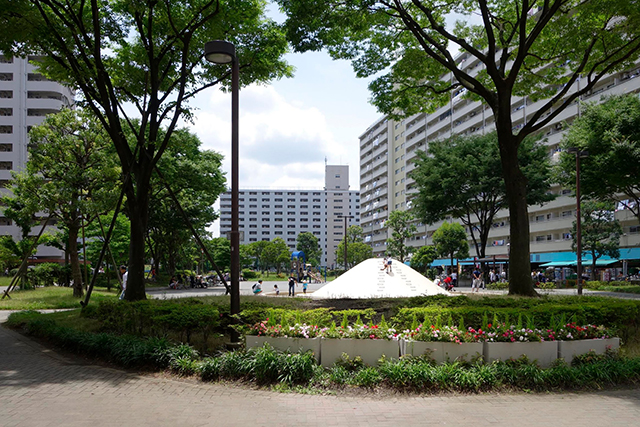
Muji, Japan’s most famous interiors export, has gotten in on the trend. It has teamed up with Urban Renaissance (UR), a rebranded version of Japan’s postwar housing agency, to renovate ageing “danchi”, or apartment blocks built to solve a housing shortage through the 1960s and ‘70s. Surrounded by open green parks and cleverly built, Muji is hoping to bring out the original charm of the danchi for a younger generation by reforming the family units into bright, open-plan studios.
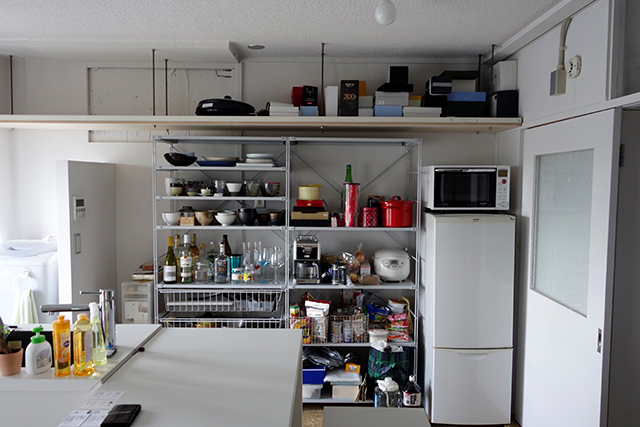
Another company that has brought attention to renovated and unique or quirky properties around Japan is R Fudosan, an estate agent that started from a Tokyo base and has now expanded to nine locations. The parent company SPEAC also do consulting, planning and design for both newly built properties and second-hand ones where they aim not to make it look brand new, but rather leave a little of its original flavor intact. Doing so is important to increase the value of second-hand properties in Japan, which only make up 13 percent of house purchases at present.
There are solutions other than renovation, too. Estate agent Able and holiday accommodation website Tomareru have teamed up to create a matching service for people to stay in properties in special economic zones, exploiting a legal loophole—Airbnb, a U.S. home-sharing service, is still regarded as illegal due to the hotel law in Japan. Tomareru has also set up a service known as “Tomarina” to allow people to stay on farms to experience rural life.
<Interviewees>
Atsumi Hayashi: Director of Speac Inc and manager at R Fudousan
Kouji Kawauchi: Director of Muji House’s Dwelling space operation division
Jun Adachi: Sales and development manager at the East Japan section of UR
Archives
Program
Built Environment and Lifestyle Dealing with an Aging Population At Home
Innovation
Policy Research
Program
Built Environment and Lifestyle The Wooden Metropolis: How Advances in Fireproofing Timber Could Change Urban Japan
Innovation
Policy Research
Related Programs


Geoeconomics IHJ Roundtable
IHJ frequently organizes roundtables as part of our mission to “contribute to building a free, open, and sustainable future through intellectual dialogue, policy research, and cultural exchange with a...
Policy Research

Innovation Asia Leaders Fellowship (ALF)
ALF was established by Teruhide Sato and Lin Kobayashi, both board members of the International House of Japan (IHJ), along with 5 other founding members. Their awareness of the necessity for a dialog...
Intellectual Dialogue
main-300x200.jpg)